

Quick Summary
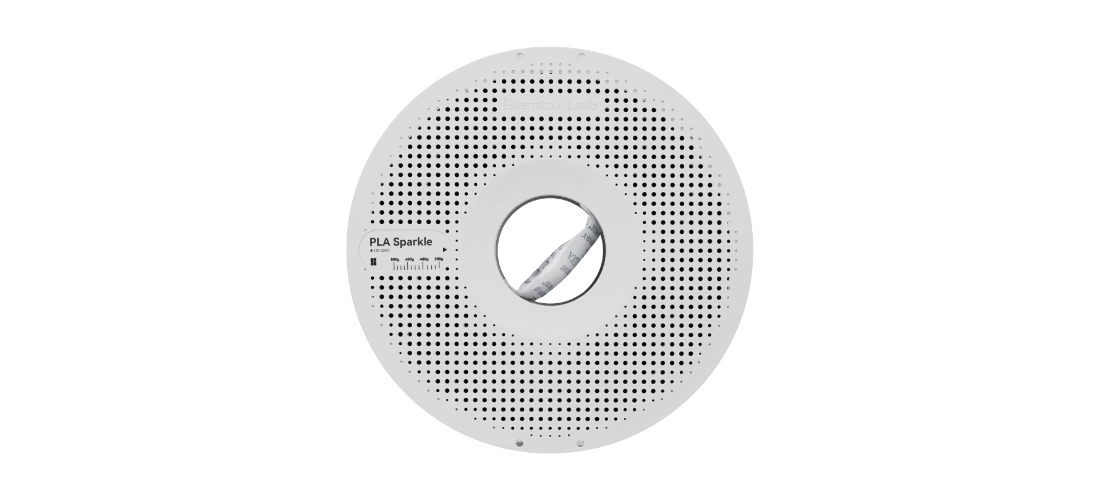
PLA filament is one of the most popular and beginner-friendly materials used in FDM 3D printing1. PLA stands for Polylactic Acid, a plastic material commonly used to print toys, models, prototypes, decorations, school projects, and simple functional parts.
For beginners, PLA is usually the best first filament because it is easy to print, affordable, widely available, and works well with most desktop 3D printers, including Bambu Lab and Elegoo FDM printers.
If you are new to 3D printing, PLA is the safest material to start with before moving to stronger or more technical materials such as PETG, TPU, ABS, ASA, or Nylon.
3D printing is becoming more popular in Malaysia, especially among students, schools, hobbyists, makers, designers, and small businesses2. However, choosing the right filament can be confusing for beginners.
There are many filament types available, such as PLA, PETG, TPU, ABS, ASA, Nylon, and carbon fibre filament. Each material has different printing difficulty, strength, flexibility, heat resistance, and usage.
Among all of them, PLA filament is usually the easiest and most recommended material for beginners.
This guide explains what PLA filament is, why it is popular, what it is used for, its advantages and limitations, and whether PLA is the right filament for your 3D printing projects.
Table of Contents
- What is PLA Filament?
- Why PLA is Popular in 3D Printing
- What is PLA Filament Used For?
- Why PLA is Good for Beginners
- Advantages of PLA Filament
- Limitations of PLA Filament
- PLA vs PLA+ vs Matte PLA vs Silk PLA
- Is PLA Suitable for Bambu Lab and Elegoo Printers?
- How to Store PLA Filament in Malaysia
- Should You Buy PLA Filament?
- Why Buy PLA Filament from Jumitech?
What is PLA Filament?
PLA filament is a type of 3D printing material used in FDM 3D printers. FDM printers work by heating filament and pushing it through a nozzle to build a model layer by layer.3
PLA stands for Polylactic Acid. It is commonly used because it is easy to print, has low warping, and produces good-looking prints with minimal setup.
For many beginners, PLA is the first filament they use because it does not require an enclosed printer and usually prints well with standard settings.
Why PLA is Popular in 3D Printing
PLA is popular because it gives a good balance of quality, price, and ease of use. It is widely available and works with most consumer 3D printers.
Many users choose PLA because it is simple to handle and suitable for many daily printing projects. It is also available in many colours and finishes, including basic PLA, matte PLA, silk PLA, translucent PLA, and PLA+.
For beginners, PLA reduces many common problems such as warping, bed adhesion issues, and complicated temperature settings.4
What is PLA Filament Used For?
PLA filament can be used for many types of 3D printing projects.
It is suitable for:
- Toys
- Keychains
- Decorative models
- School projects
- Display items
- Miniatures
- Product prototypes
- Custom gifts
- Figurines
- Simple household items
- Low-stress functional parts
PLA is best for prints that do not need to handle high heat, heavy load, or outdoor weather for a long period.
Why PLA is Good for Beginners
PLA is one of the best materials for beginners because it is easy to print and does not need advanced printer setup.
Most beginner-friendly printers, including Bambu Lab and Elegoo FDM printers, can print PLA easily. A beginner can usually start printing PLA after loading the filament, choosing a print file, slicing it, and starting the print.
PLA is also suitable for learning basic 3D printing skills such as bed adhesion, print speed, nozzle temperature, support settings, and model orientation.
Advantages of PLA Filament
1. Easy to Print
PLA is easier to print compared to many other materials. It does not usually require a heated enclosure and works well with most desktop 3D printers5.
2. Good Surface Quality
PLA can produce clean and smooth prints, especially when the printer is properly calibrated.
3. Affordable
PLA is usually one of the more affordable 3D printer filaments, making it suitable for beginners, schools, and users who print often.
4. Wide Colour Options
PLA is available in many colours and finishes, including matte, silk, marble, rainbow, glow, wood-like, and translucent styles.
5. Low Warping
PLA has lower warping compared to materials such as ABS or Nylon. This makes it easier to print large or flat models.6
6. Suitable for Many Projects
PLA can be used for decorative items, educational models, toys, prototypes, and small business products.
Limitations of PLA Filament
Although PLA is beginner-friendly, it is not perfect for every use case.
1. Lower Heat Resistance
PLA can soften under high heat. It is not recommended for parts that will be left inside a hot car, near a motor, or under strong sunlight for long periods.
2. Not the Strongest Material
PLA is good for basic prints, but it may not be suitable for parts that need high impact resistance, flexibility, or heavy mechanical strength.
3. Not Ideal for Outdoor Use
PLA can degrade faster outdoors compared to materials such as PETG or ASA7.
4. Can Become Brittle
Some PLA prints may become brittle depending on the brand, print settings, and storage condition.
PLA vs PLA+ vs Matte PLA vs Silk PLA
There are different types of PLA filament. Each one has a slightly different look and purpose.
| Type of PLA | Best For | Main Feature |
|---|---|---|
| PLA Basic | Beginners and general printing | Easy to print and affordable |
| PLA+ | Stronger everyday prints | Improved toughness compared to basic PLA |
| Matte PLA | Premium-looking models | Smooth, non-glossy surface finish |
| Silk PLA | Decorative prints | Shiny and colourful finish |
| Marble PLA | Display models | Stone-like appearance |
| Rainbow PLA | Creative prints | Multi-colour effect in one spool |
For beginners, basic PLA is the best first choice. After that, users can try PLA+, matte PLA, or silk PLA depending on the project.
Is PLA Suitable for Bambu Lab and Elegoo Printers?
Yes, PLA is suitable for many Bambu Lab and Elegoo FDM 3D printers.
For Bambu Lab users, PLA is a good starting material for printers such as:
- Bambu Lab A1
- Bambu Lab A1 mini
- Bambu Lab P1S
- Bambu Lab X1 Carbon
- Bambu Lab H series
For Elegoo users, PLA is suitable for FDM printers such as:
- Elegoo Neptune series
- Elegoo Centauri series
However, Elegoo Mars and Elegoo Saturn printers are resin printers, not filament printers. These machines use liquid resin instead of PLA filament.
How to Store PLA Filament in Malaysia
Malaysia’s weather is hot and humid, so filament storage is important.
Even though PLA is easier to store compared to Nylon or TPU, it can still absorb moisture from the air over time. Wet filament may cause poor print quality, stringing, rough surfaces, popping sounds during printing, and weaker prints.8
To store PLA properly:
- Keep it in a sealed bag or airtight container
- Use silica gel or desiccant
- Avoid leaving the spool open for too long
- Store it away from direct sunlight
- Use a filament dryer if the filament becomes wet
Good storage helps maintain print quality and reduces failed prints.
Should You Buy PLA Filament?
You should buy PLA filament if you are new to 3D printing or want a material that is easy, affordable, and suitable for many projects.
PLA is recommended for:
- Beginners
- Students
- Schools
- Hobbyists
- Home users
- Toy printing
- Decorative models
- Prototypes
- Custom gifts
- Small business products
You may want to choose PETG, TPU, ASA, ABS, or Nylon instead if your print needs higher heat resistance, flexibility, outdoor durability, or engineering strength.
Why Buy PLA Filament from Jumitech?
Buying filament is not only about choosing the cheapest spool. Poor-quality filament can cause clogging, stringing, weak prints, rough surfaces, and failed prints.
At Jumitech, customers can explore beginner-friendly 3D printers, filaments, and accessories from trusted brands such as Bambu Lab and Elegoo.
Jumitech is suitable for:
- Beginners buying their first PLA filament
- Bambu Lab users
- Elegoo users
- Schools and students
- Hobbyists and makers
- Small businesses
- Users who need help choosing the right filament
If you are not sure which PLA filament to choose, Jumitech can help recommend the right material based on your printer model, project type, and printing goal.
Sources
- Bryant, Anj, and Denise Bertacchi. “Best Filaments for 3D Printing 2026.” Tom’s Hardware, November 29, 2025. https://www.tomshardware.com/best-picks/best-filaments-for-3d-printing ↩︎
- Sahat, Idris Mat, et al. “A study on 3D printing usage among Malaysian users.” Journal of Mechanical Engineering and Sciences, vol. 17, no. 2, 2023, pp. 9483-9491. https://doi.org/10.15282/jmes.17.2.2023.7.0751 ↩︎
- “Fused Deposition Modeling: Everything You Need To Know About FDM 3D Printing.” 3DSourced, 2023. https://www.3dsourced.com/3d-printing-technologies/fused-deposition-modeling-fdm ↩︎
- “PLA Filament Guide – Print Temps, Settings & Tips.” SpoolHound, 2026. https://spoolhound.com/pla-filament-guide ↩︎
- “3D Printing Filament.” Wikipedia, 2024. https://en.wikipedia.org/wiki/3D_printing_filament ↩︎
- Nazan. “Thermal Deformations of Thermoplast during 3D Printing: Warping in the Case of ABS.” PMC8620654, 2020. https://doi.org/10.3390/polym12010001 ↩︎
- Tomastik, Jan, et al. “Photooxidative ageing of 3D printed polymers PLA, ABS, PET, HIPS and PC induced by long-term UV radiation.” arXiv preprint 2606.00068, 2026. https://doi.org/10.48550/arXiv.2606.00068 ↩︎
- “Moisture Management: Filament Maintenance Made Simple.” 3D Printing by Bokey, 2025. https://www.3dprintingbybokey.com/blog/moisture-mgmt-filament-maintenance-made-simple ↩︎