

Quick Summary
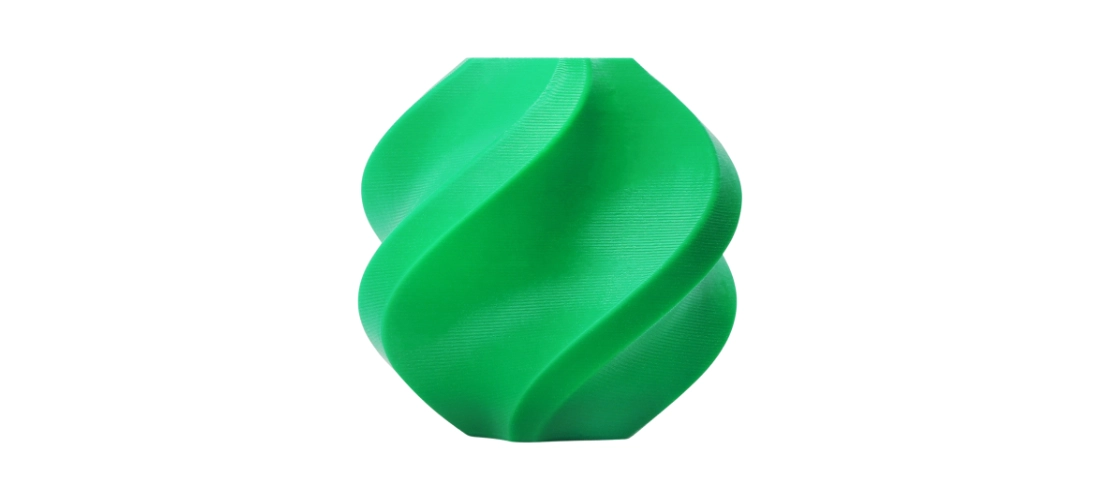
PETG filament is a strong and durable 3D printing material used in FDM 3D printers. PETG stands for Polyethylene Terephthalate Glycol, and it is known for being tougher, more impact-resistant, and more heat-resistant than PLA filament.
For beginners who already understand basic 3D printing, PETG is usually the next material to try after PLA. It is suitable for functional parts, brackets, holders, storage items, outdoor parts, and prints that need better strength than normal PLA.
If PLA is best for easy decorative prints, PETG is better for stronger and more practical parts.
3D printing is becoming more popular in Malaysia, especially among students, schools, hobbyists, makers, designers, engineers, and small businesses. As users become more experienced, many start looking for materials that are stronger than PLA.
This is where PETG filament becomes useful.
PETG is one of the most popular filament choices after PLA because it offers a good balance between strength, durability, flexibility, and ease of printing1. It is not as easy as PLA, but it is still easier to print compared to advanced materials such as ABS, ASA, Nylon, or carbon fibre filament.
This guide explains what PETG filament is, why it is popular, what it is used for, its advantages and limitations, and whether PETG is the right filament for your 3D printing projects.
Table of Contents
- What is PETG Filament?
- Why PETG is Popular in 3D Printing
- What is PETG Filament Used For?
- Is PETG Good for Beginners?
- Advantages of PETG Filament
- Limitations of PETG Filament
- PETG vs PLA Filament
- PETG vs ABS Filament
- Is PETG Suitable for Bambu Lab and Elegoo Printers?
- How to Store PETG Filament in Malaysia
- Should You Buy PETG Filament?
- Why Buy PETG Filament from Jumitech?
- FAQ
What is PETG Filament?
PETG filament is a type of 3D printing material used in FDM 3D printers. FDM printers work by heating filament and pushing it through a nozzle to build a model layer by layer.
PETG stands for Polyethylene Terephthalate Glycol. It is based on PET plastic, with glycol added to improve printability, durability, and flexibility2.
In simple terms, PETG is a stronger and more durable filament compared to PLA. It is often chosen when users want parts that can handle more stress, light impact, moisture, and higher temperatures.
Why PETG is Popular in 3D Printing
PETG is popular because it offers a good balance between strength and printability. It is stronger and tougher than PLA, but easier to print than ABS or Nylon.3
Many users choose PETG when they want to print items that are not only decorative, but also practical. PETG is commonly used for parts that need to be more durable, slightly flexible, and less brittle.
PETG also has better resistance to moisture and heat compared to PLA, making it more suitable for functional parts and some outdoor applications.
What is PETG Filament Used For?
PETG filament can be used for many practical and functional 3D printing projects.
It is suitable for:
- Brackets
- Holders
- Storage boxes
- Clips
- Mounts
- Tool organisers
- Protective covers
- Functional prototypes
- Simple mechanical parts
- Outdoor parts
- Parts exposed to light moisture
- Stronger household items
PETG is best for prints that need more strength and durability than PLA, but do not require advanced engineering materials.
Is PETG Good for Beginners?
PETG can be used by beginners, but it is usually better for users who already have some experience with PLA.
PETG is slightly harder to print than PLA because it can produce more stringing, may stick strongly to the print bed, and usually needs higher nozzle and bed temperatures.4
However, with the right settings, PETG is still manageable on many modern desktop 3D printers. Many Bambu Lab and Elegoo FDM printers can print PETG well when the correct profile and filament settings are used.
For a complete beginner, PLA is still the easiest first material. After learning basic 3D printing, PETG is a good second material to try.
Advantages of PETG Filament
1. Stronger Than PLA
PETG is tougher and more impact-resistant than PLA. This makes it more suitable for parts that need to handle daily use.
2. Better Heat Resistance
PETG can handle higher temperatures compared to PLA. This makes it more suitable for parts that may be exposed to warmer environments.
3. More Durable
PETG is less brittle than PLA, which means it can bend slightly before breaking. This is useful for functional prints.
4. Good Moisture Resistance
PETG handles moisture better than PLA, making it useful for containers, outdoor items, and parts that may be exposed to light water contact.5
5. Suitable for Functional Parts
PETG is commonly used for brackets, holders, clips, mounts, covers, and other practical 3D printed items.
6. Easier Than ABS
PETG is usually easier to print than ABS because it does not require a high-temperature enclosed chamber for most basic prints.
Limitations of PETG Filament
Although PETG is strong and useful, it also has some limitations.
1. More Stringing
PETG can create stringing if the temperature, retraction, or print speed is not set properly.
2. Can Stick Too Strongly to the Bed
PETG may stick very strongly to certain print surfaces. This can make prints harder to remove and may damage the build plate if not handled correctly.6
3. Not as Easy as PLA
PETG needs more tuning compared to PLA. Beginners may need to adjust temperature, cooling, speed, and retraction settings.
4. Surface Finish May Be Less Sharp
PETG prints may look slightly glossier and may not always have the same sharp detail as PLA, depending on the printer and settings.
5. Not as Heat-Resistant as ASA or ABS
PETG has better heat resistance than PLA, but it is still not the best option for very high-temperature applications.7
PETG vs PLA Filament
PLA and PETG are both popular FDM filaments, but they are used for different purposes.
| Feature | PLA | PETG |
|---|---|---|
| Print Difficulty | Very easy | Moderate |
| Strength | Good for basic prints | Stronger and tougher |
| Flexibility | More brittle | Slightly flexible |
| Heat Resistance | Lower | Better |
| Outdoor Use | Not ideal | Better than PLA |
| Surface Finish | Clean and detailed | Glossy and durable |
| Best For | Decorative prints and beginners | Functional parts and stronger prints |
Choose PLA if you want easy printing, nice surface quality, and beginner-friendly results.
Choose PETG if you want stronger, tougher, and more practical parts.
PETG vs ABS Filament
PETG and ABS are both stronger than PLA, but they are not the same.
| Feature | PETG | ABS |
| Print Difficulty | Easier | Harder |
| Warping | Lower | Higher |
| Enclosure Needed | Usually not required for simple prints | Recommended |
| Strength | Strong and durable | Strong and heat-resistant |
| Odour | Lower | Stronger smell |
| Beginner Friendly | More beginner-friendly | Less beginner-friendly |
PETG is usually a better choice for users who want strength without dealing with the higher printing difficulty of ABS.
ABS may be better for parts that need higher heat resistance, but it usually requires better ventilation and an enclosed printer.8
Is PETG Suitable for Bambu Lab and Elegoo Printers?
Yes, PETG is suitable for many Bambu Lab and Elegoo FDM 3D printers.
For Bambu Lab users, PETG can be printed on printers such as:
- Bambu Lab A1
- Bambu Lab A1 mini
- Bambu Lab P1S
- Bambu Lab X1 Carbon
- Bambu Lab H series
For Elegoo users, PETG is suitable for FDM printers such as:
- Elegoo Neptune series
- Elegoo Centauri series
However, Elegoo Mars and Elegoo Saturn printers are resin printers, not filament printers. These machines use liquid resin instead of PETG filament.
For best results, users should choose the correct PETG profile in the slicer and make sure the print bed surface is suitable for PETG.
How to Store PETG Filament in Malaysia
Malaysia’s weather is hot and humid, so filament storage is very important.
PETG can absorb moisture from the air. Wet PETG filament may cause stringing, popping sounds, rough surfaces, bubbles, weak layer adhesion, and poor print quality.9
To store PETG properly:
- Keep it in a sealed bag or airtight container
- Use silica gel or desiccant
- Avoid leaving the spool open for too long
- Store it away from direct sunlight
- Use a dry box if printing regularly
- Use a filament dryer if the filament becomes wet
Good storage helps PETG print cleaner, stronger, and with fewer failures.
Should You Buy PETG Filament?
You should buy PETG filament if you want stronger and more durable prints than PLA.
PETG is recommended for:
- Functional parts
- Brackets
- Holders
- Storage items
- Outdoor parts
- Tool organisers
- Stronger household items
- Practical prototypes
- School engineering projects
- Maker projects
- Small business products
If you are a complete beginner, PLA is still the easiest material to start with. But if you already know how to print PLA and want stronger prints, PETG is a good next step.
Why Buy PETG Filament from Jumitech?
Buying filament is not only about choosing the cheapest spool. Poor-quality PETG filament can cause stringing, clogging, weak prints, poor bed adhesion, and failed prints.
At Jumitech, customers can explore 3D printers, PETG filament, PLA filament, and accessories suitable for Bambu Lab and Elegoo users.
Jumitech is suitable for:
- Users buying their first PETG filament
- Bambu Lab users
- Elegoo users
- Schools and students
- Hobbyists and makers
- Small businesses
- Users who need help choosing between PLA and PETG
If you are not sure whether PETG is suitable for your printer or project, Jumitech can help recommend the right filament based on your printer model, project type, and printing goal.
Sources
- Conniff, Megan, and Audrius PhD Zidonis. “PETG vs. PLA: Strength and Printing Comparison.” Xometry, 2022. https://www.xometry.com/resources/3d-printing/petg-vs-pla-3d-printing/ Accessed June 25, 2026 ↩︎
- “Glycol-Modified Polyethylene Terephthalate (PETG, PET-G).” www.makeitfrom.com/material-properties/Glycol-Modified-Polyethylene-Terephthalate-PETG-PET-G, 2020. https://www.makeitfrom.com/material-properties/Glycol-Modified-Polyethylene-Terephthalate-PETG-PET-G Accessed June 25, 2026 ↩︎
- “PLA vs ABS vs PETG vs Nylon: 3D Printing Materials Compared [2026].” find3dprinting.com, 2026. https://www.find3dprinting.com/blog/pla-vs-abs-vs-petg-vs-nylon Accessed June 25, 2026 ↩︎
- “PLA vs PETG: Which 3D Printing Filament Should You Actually Use? (2026 Tested Guide).” ADP Industries, 2026. https://www.adpindustries.com/blog/pla-vs-petg-3d-printing-comparison/ Accessed June 25, 2026 ↩︎
- Engineering, Department of Biomedical. “PETG Material Details.” University of Basel. https://dbe.unibas.ch/en/services/core-facility-3d-print-lab/home/materials/petg/ Accessed June 25, 2026 ↩︎
- “Print Sticking Too Well to Build Plate.” Polymaker Wiki, 2023. https://wiki.polymaker.com/printing-tips/common-printing-issues/print-sticking-too-well-to-build-plate Accessed June 25, 2026 ↩︎
- Conniff, Megan, and Audrius PhD Zidonis. “PETG vs. PLA: Strength and Printing Comparison.” Xometry, 2022. https://d2umhn5ltn81a6.cloudfront.net/resources/3d-printing/petg-vs-pla-3d-printing/ Accessed June 25, 2026 ↩︎
- Reynolds, Mike. “ABS FDM 3D Printer Buyer’s Guide: Best Enclosed Machines for ABS Printing 2026.” NozzleNerd, 2026. https://nozzlenerd.com/abs-fdm-3d-printer-buyers-guide-2026/ Accessed June 25, 2026 ↩︎
- “Wet Filament Guide: How to Fix Moisture Problems in PETG.” PETG USA. https://petgusa.com/pages/wet-filament-guide Accessed June 25, 2026 ↩︎